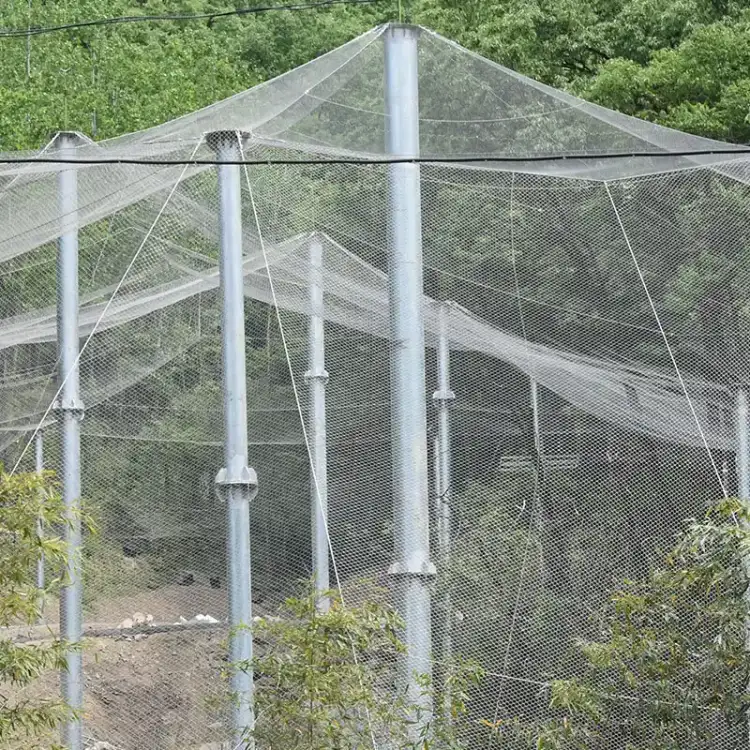
When an aircraft lifts off, millions of parts work in harmony. But one of the most overlooked components isn’t on the plane at all—it’s the fence running along the edge of the airfield.
Far from being mere boundary markers, modern airport perimeters are **mission-critical infrastructure**, silently preventing disasters before they happen.
Table of Contents
ToggleWhy “Just a Fence” Doesn’t Cut It Anymore
Airports today face converging risks:
- 🦴 A single bird strike can cost $1M+ in damage (FAA data)
- 🦌 Ground animals cause hundreds of runway incursions yearly
- ⚠️ Unauthorized access—even by curious hikers—can trigger full operational shutdowns
Legacy chain-link or wooden barriers simply can’t address these threats. What’s needed is a **systems-level approach** to perimeter design.
Three Pillars of Next-Gen Airport Fencing
1. Aerodynamic Resilience, Not Just Strength
In open terrain, wind loads dominate structural performance. Leading solutions use:
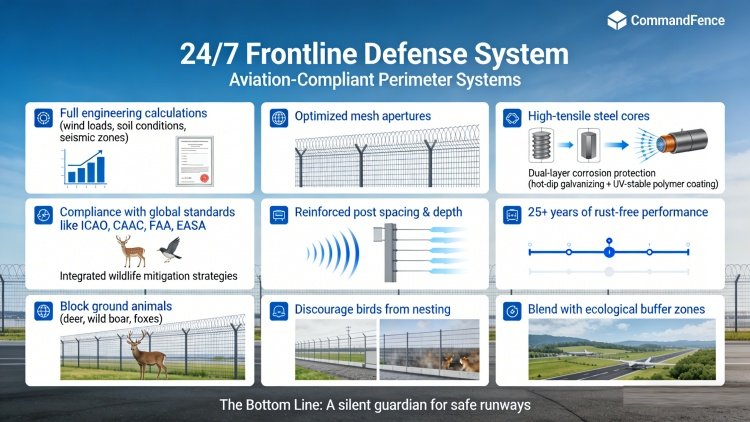
• Perforated or woven mesh patterns that reduce wind pressure by up to 60%
• Deep-driven, reinforced posts calibrated for local microclimate data
• Flexible joints that absorb gust energy without fatigue cracking
2. Wildlife Exclusion as Standard Practice
ICAO Annex 14 doesn’t just recommend—it mandates effective wildlife control. Smart fencing integrates:
• Smooth, sloped tops to discourage perching
• Buried extensions (30–50 cm) to block burrowers like foxes or rabbits
• Minimal vegetation retention zones to avoid attracting rodents
3. Passive Deterrence That Works 24/7
No guards? No problem. The best fences deter through design:
• Vertical openings under 13mm = no finger or tool grip
• High-tensile steel (>800 MPa) resists bolt cutters
• Seamless integration points for sensors, lighting, or surveillance poles
Built to Outlast the Elements
Airport fences operate in some of Earth’s harshest conditions—coastal corrosion, desert UV, freeze-thaw cycles. Premium systems combat this with:
• Hot-dip galvanizing (min. 275 g/m² zinc coating)
• Top-coat powder finishes rated for 10+ years of color retention
• Stainless steel fasteners in high-salinity zones
Global Standards, Local Execution
Whether you’re building near Oslo or Dubai, your perimeter must align with:
• ICAO Annex 14 – the global baseline for aerodrome safety
• National civil aviation authority rules (FAA Part 139, EASA AD, etc.)
• Critical infrastructure protection frameworks
Leading providers don’t just supply panels—they deliver **certifiable engineering packages** with load calculations, material test reports, and installation protocols.
The Bottom Line
Airport security doesn’t start at the terminal. It starts at the fence line.
Investing in a truly engineered perimeter isn’t about compliance—it’s about ensuring that every takeoff happens on a clear, safe, and controlled runway.
Because the first line of defense for flight safety is often the one you never notice. ✈️🛡️